
Radon in Winnipeg Homes: What Every Homeowner Should Know
Most homeowners know to watch for water in their basement. Fewer think about what's in the air.
Far fewer realize there may be another issue hiding beneath their home - one they can't see, smell, or detect without testing.
Radon is one of the most overlooked homeownership issues in Canada, yet it's something every homeowner should understand. You can't see it, smell it, or taste it, but long-term exposure can have serious health consequences.
The good news?
Testing for radon is simple, and if elevated levels are found, solutions are available.
If you own a home in Winnipeg or are thinking about buying one, here's what you need to know.
What Is Radon?
Radon is a naturally occurring radioactive gas created by the breakdown of uranium in soil and rock. As it forms underground, it can move through the soil and enter homes through:
Foundation cracks
Gaps around pipes
Floor drains
Sump pits
Openings in basement floors and walls
Because radon enters homes through the soil beneath them, the highest concentrations are typically found in basements and lower levels of the home.
The important thing to understand is that radon can be present in any home, regardless of age, size, location, or condition.
Why Is Radon a Concern?
According to health authorities, radon is the second leading cause of lung cancer after smoking. The risk comes from long-term exposure to elevated levels over many years.
Because radon has no smell, colour, or taste, most homeowners have no idea whether it's present without testing. That's what makes it different from many other home issues.
You can't see warning signs.
Is Radon Common in Manitoba?
Yes. Radon can be found throughout Manitoba and across Canada. Because Manitoba consistently ranks among the provinces with higher radon prevalence, homeowners here should be particularly aware of the issue. In fact, Manitoba is in the top 3 provinces in Canada for high levels of radon, making it an important consideration for homeowners.
Some homes have very low levels. Others can have elevated levels even when neighbouring homes do not.
That's because radon levels can vary significantly from one property to another based on:
Soil conditions
Foundation construction
Air movement within the home
The home's mechanical systems
The only way to know your home's radon level is to test.
Can New Homes Have Radon?
Absolutely. A common misconception is that radon is only an issue in older homes. In reality:
Older homes can have radon.
New homes can have radon.
Renovated homes can have radon.
A newer home may actually create conditions that trap radon more effectively because modern construction is often more airtight.
How Do You Test for Radon?
Testing is straightforward. A radon test kit is placed in the lowest lived-in level of the home and left for an extended period.
Long-term testing is generally considered the most accurate method because radon levels fluctuate throughout the year.
Many homeowners choose to test during the winter season when homes are closed up and radon concentrations are often highest.
What Happens If Radon Levels Are High?
Finding elevated radon levels doesn't mean you need to panic. In most cases, mitigation systems can significantly reduce radon levels.
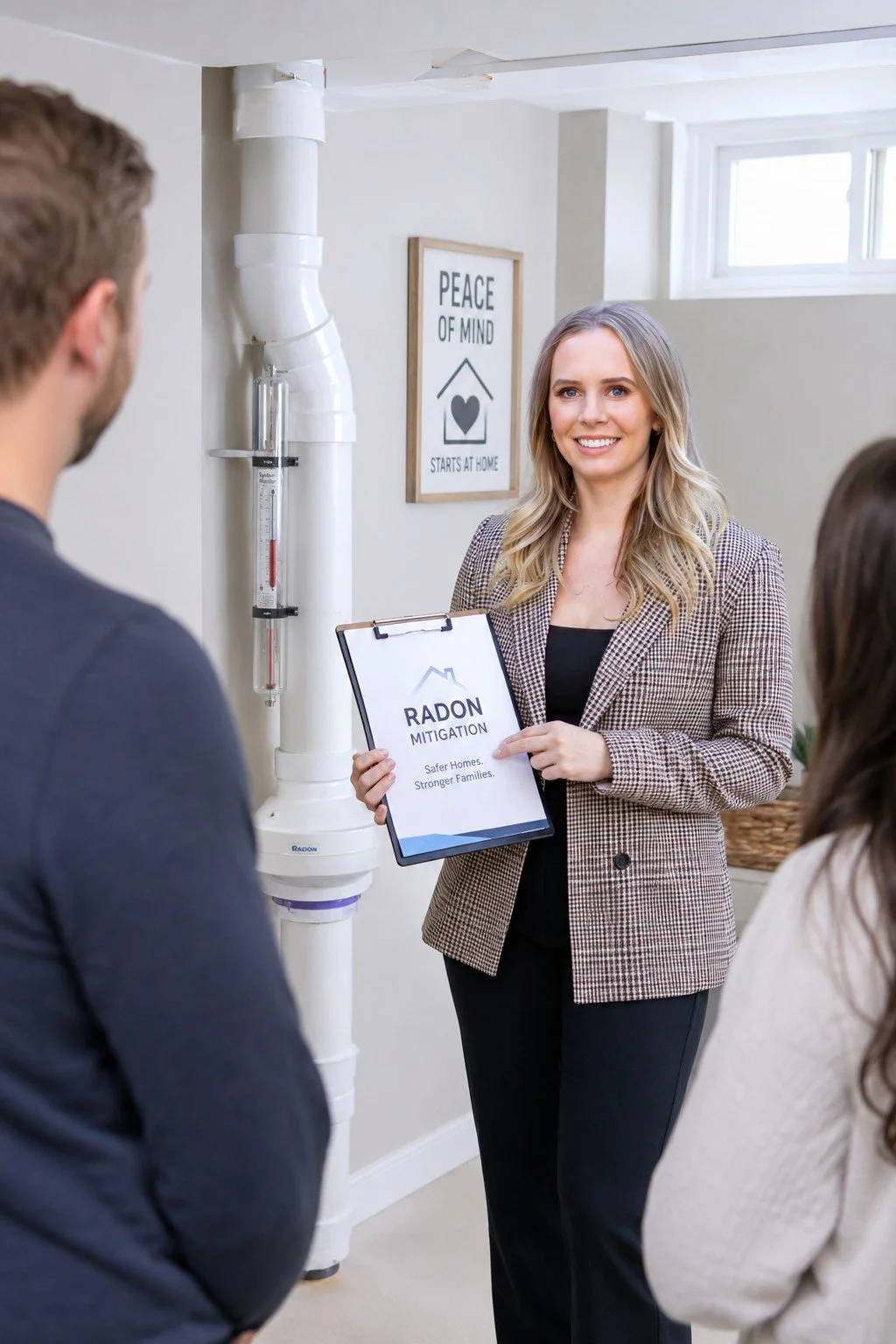
A typical mitigation system works by collecting radon beneath the foundation and venting it safely outside before it enters the living space.
These systems are commonly installed and can often reduce radon levels dramatically.
What level is Considered High?
In Canada, the recommended guideline is under 200 Bq/m³.
If testing shows radon levels above this threshold, homeowners are encouraged to take steps to reduce exposure through a radon mitigation system. Even homes with lower readings may benefit from monitoring over time, as radon levels can fluctuate depending on weather, seasons, and changes within the home.
Common Myths About Radon
"My home is new, so I don't need to worry."
False. Radon can affect homes of any age.
"My neighbour tested and had low levels."
That doesn't necessarily mean your home will have similar results. Radon levels can vary greatly from one property to the next.
"If I had radon, I would notice it."
Unfortunately, you won't. Radon has no smell, taste, or visible signs. It is undetectable by human senses!
"High radon levels mean there's something wrong with the house."
Not necessarily. Radon is a naturally occurring environmental issue and can affect otherwise well-maintained homes.
Should Home Buyers Test for Radon?
Radon isn't typically something buyers can identify during a standard home showing, which is why education and testing are so important. Many buyers choose to test after purchasing a home. Testing is a simple way to better understand your home's indoor air quality and help protect your family's health.
Whether you're buying or already own a home, understanding radon is simply part of being an informed homeowner. The goal isn't to create fear.
It's to understand potential risks and make informed decisions.
The Bottom Line
Radon is one of the few homeownership risks that can't be seen with the naked eye.
You won't notice warning signs. You won't smell it. And you won't know if it's present without testing.
The good news is that testing is relatively simple, and solutions exist if elevated levels are found.
Understanding radon is another important part of protecting your home, your family, and your long-term investment.
Key Takeaways
Radon is a naturally occurring radioactive gas that can enter homes through the soil.
Manitoba has some of the highest radon levels in Canada.
Radon cannot be seen, smelled, or tasted.
Both new and older homes can have elevated radon levels.
The only way to know your home's radon level is through testing.
Radon mitigation systems can often significantly reduce exposure.
Understanding radon is an important part of responsible homeownership.
Frequently Asked Questions on Radon Testing
What is radon?
Radon is a naturally occurring radioactive gas produced by the breakdown of uranium in soil and rock.
Is radon common in Manitoba?
Radon can be found throughout Manitoba and across Canada. Levels vary from home to home.
Can new homes have radon?
Yes. Both new and older homes can have elevated radon levels.
How do I know if my home has radon?
The only way to know is through testing.
Can radon be fixed?
In many cases, yes. Radon mitigation systems can significantly reduce radon levels in a home.
How much does radon testing cost?
Costs vary depending on the testing method used. Many homeowners purchase long-term radon test kits, while others choose professional testing services.
Should I test for radon before buying a home?
Some buyers choose to test during the buying process, while others test after possession. The important thing is understanding that radon can be present in any home regardless of age or condition.
Final Thoughts
The goal isn't to create fear. It's to create awareness. Like many aspects of homeownership, understanding the issue is the first step toward managing it responsibly. Homeownership isn't just about maintaining what you can see. Some of the most important things to understand are the things you can't.
Radon is one of those hidden issues that many homeowners never think about until they learn more about it. Fortunately, testing is simple, solutions are available, and understanding the risks allows homeowners to make informed decisions about their property.
If you have questions about buying, selling, or owning a home in Winnipeg, I'm always happy to help. Let's connect.

Your Friend in Real Estate,
Sheyla Duncan
Phone: (204) 871-3228
Email: Sheyla@QueenTeam.ca
Sheyla Duncan is a REALTOR® with The Queen Team who focuses on helping homeowners understand the realities of owning and maintaining a home in Winnipeg. Through practical homeownership education and preventative maintenance guidance, she helps clients make informed decisions that protect both their homes and their families.