
Winnipeg Real Estate Market Update: Higher Interest Rates, More Choice, and What Comes Next

October 28, 2026 | By Jennifer Queen, The Queen Team
If there is one thing I've learned after more than 15 years in Winnipeg real estate, it's that the market rarely moves in a straight line.
Just when buyers begin feeling a little more confident, something changes.
Sometimes it's the number of homes available. Sometimes it's a shift in consumer confidence. Sometimes it's an unexpected economic development halfway around the world.
And sometimes it's an interest rate announcement.
On October 28, 2026, the Bank of Canada increased its policy interest rate by 0.25 percentage points, bringing it from 2.25% to 2.50%.
This was the first increase since July 2023, following a prolonged period of declining and then stable interest rates.
Meanwhile, the Canadian Real Estate Association (CREA) has revised its housing market forecasts downward, suggesting fewer Canadians will purchase homes this year than previously anticipated.
And new research from Canada Mortgage and Housing Corporation (CMHC) is reminding us that Canada's housing affordability challenges run much deeper than interest rates alone. That's a lot of information to digest in a relatively short period of time.
But here's what I find most interesting.
The housing market can slow down without homes necessarily becoming dramatically cheaper.
In fact, that's a pretty good description of what we've been experiencing in Winnipeg.
Let's talk about what's happening, why it matters, and what I think buyers and sellers should be paying attention to as we head toward 2027.
The Short Answer: What's Happening in Winnipeg's Housing Market?
Winnipeg's real estate market is becoming more balanced in some segments, with increased inventory giving buyers more options and opportunities for due diligence. However, well-priced, well-presented homes are still attracting competition, and detached home prices have remained above last year's levels.
The Bank of Canada's October 28 rate increase adds another challenge for affordability, particularly for variable-rate borrowers and buyers arranging new mortgages. CREA has also lowered its national home sales forecast, although it continues to project modest average price growth.
For Winnipeg buyers and sellers, the most important consideration is that market conditions vary significantly by neighbourhood, property type, price range, and condition.
A national headline doesn't necessarily describe what's happening on your street.
And a change in interest rates doesn't automatically mean a corresponding change in home prices.
The Bank of Canada Just Raised Interest Rates. Why?
On October 28, the Bank of Canada raised its overnight policy rate by 25 basis points, bringing it to 2.50%. The last time we saw an increase was July 2023.
Since June 2024, Canadians have experienced a series of interest rate cuts, and the policy rate had been sitting at 2.25% for nearly a year. That period of relative stability has now ended.
So why increase rates when many Canadians are still struggling with affordability? The short answer is inflation.
Canada's inflation rate has remained around 3%, driven significantly by elevated energy prices and broader global economic pressures.
The ongoing conflict in the Middle East has contributed to higher oil prices, which affect far more than the cost of filling your vehicle. Energy is involved in transporting food, manufacturing products, operating businesses, and delivering services.
When those costs remain elevated, businesses may eventually pass them along to consumers. The Bank of Canada is concerned that inflationary pressures could become more widespread and persistent.
Its October forecast anticipates inflation remaining elevated through much of 2027 before returning closer to its 2% target in 2028.
Increasing interest rates is one of the tools the Bank uses to discourage excessive spending and borrowing, helping to reduce inflation over time. Unfortunately, that same tool can make housing less affordable.
And that's where things become complicated.
Could Interest Rates Increase Again?
Possibly.
The Bank of Canada has indicated that further increases may be necessary, although it has also emphasized that future decisions will depend on economic developments.
I think that's an important distinction. A forecast is not a guarantee. Economic conditions have changed repeatedly over the past few years, and interest rate expectations have changed right along with them.
For anyone making a major financial decision, I would be very cautious about building a plan around the assumption that rates will either rise dramatically or start falling again within a particular timeframe.
Instead, I'd focus on whether the numbers work for your household today and whether you have enough flexibility to handle potential changes.
What Does the Interest Rate Increase Mean for Your Mortgage?
This is probably the most practical question coming out of the announcement.
The answer depends on what type of mortgage you have.
If You Have a Variable-Rate Mortgage
Variable-rate mortgages are generally connected to your lender's prime rate.
When the Bank of Canada increases its policy rate, lenders commonly respond by increasing their prime rates.
If your mortgage has adjustable payments, your regular payment may increase.
If you have a variable-rate mortgage with fixed payments, your payment may remain unchanged initially, but a larger portion of it could go toward interest instead of paying down your principal.
Depending on your mortgage terms, a sufficiently large rate increase could eventually require a payment adjustment.
The important thing is to understand how your particular mortgage is structured.
Not all variable-rate mortgages behave the same way. The Financial Consumer Agency of Canada’s explanation of mortgage interest is a helpful starting point; your lender can confirm your contract’s details.
If You Have a Fixed-Rate Mortgage
If you're currently in a fixed-rate mortgage term, this announcement doesn't change your contracted rate or scheduled payment.
That's one of the main reasons some homeowners prefer fixed-rate mortgages: payment predictability.
However, if your mortgage is coming up for renewal, you'll need to consider the rates available when you renew.
New fixed mortgage rates are influenced more directly by bond yields and broader financial market expectations than by any single Bank of Canada announcement.
In fact, fixed mortgage rates can move before the Bank makes a decision because financial markets have already anticipated what may happen.
If You Have a Home Equity Line of Credit
Home equity lines of credit, or HELOCs, are commonly tied to the lender's prime rate.
If your lender increases prime by 0.25 percentage points, your borrowing costs will generally increase accordingly.
This is worth paying attention to if you've been using a HELOC for renovations, debt consolidation, or other household expenses.
If Your Mortgage Is Coming Up for Renewal
I would encourage you to start the conversation early. Some lenders allow borrowers to secure a renewal rate several months before their current term expires, although the available options and rate-hold periods vary.
If you're renewing within the next four to six months, it's worth speaking with your lender or mortgage broker now.
You may be able to compare offers, review your amortization, evaluate fixed versus variable options, and understand what your future payments could look like.
And if you're planning to move, it may also be worth exploring whether your existing mortgage can be ported to another property. These are conversations I'd rather see people have well before a deadline.
What Does a 0.25 Percentage Point Rate Increase Actually Cost?
Sometimes the headlines make a quarter-point increase sound enormous. Other times, people dismiss it as insignificant. The reality is somewhere in between.
Consider a hypothetical $400,000 mortgage amortized over 25 years.
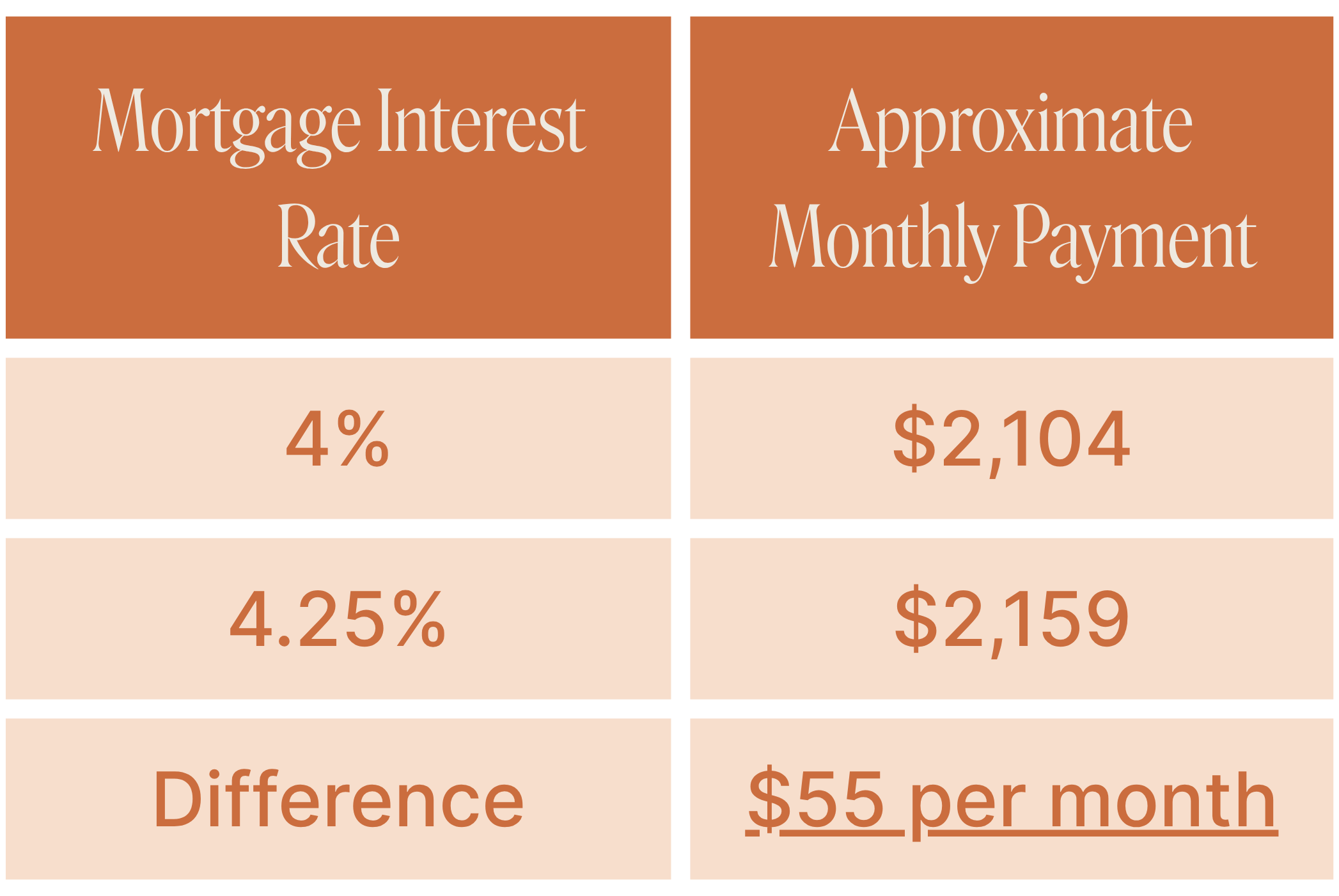
Illustrative calculation using Canadian semi-annual compounding conventions, with the full mortgage rate changing by 0.25 percentage points. Actual payments depend on the lender, mortgage terms, amortization and payment structure.
An additional $55 per month might be manageable for one household and meaningful for another. And remember, this example considers just one quarter-point change.
If rates rise multiple times, or if someone is renewing a mortgage from a significantly lower rate secured several years ago, the difference can be much greater.
For buyers, a higher qualifying rate may also affect the amount a lender is willing to approve.
That's why I always encourage buyers to speak with their mortgage professional before setting their search budget and to leave some breathing room rather than automatically purchasing at the maximum approved amount.
CREA Has Lowered Its Housing Market Forecast. Should We Be Worried?
On October 16, the Canadian Real Estate Association released an updated forecast for 2026 and 2027. And the revisions are worth paying attention to.
CREA now expects approximately 444,530 residential properties to sell across Canada in 2026. That's a 5.2% decline compared with 2025.
Earlier in the year, the association had anticipated stronger activity, but rising borrowing costs and renewed economic uncertainty have changed its outlook. For 2027, CREA is forecasting a recovery in sales activity, although its expectations have also become more conservative.
CREA's October 2026 National Housing Forecast
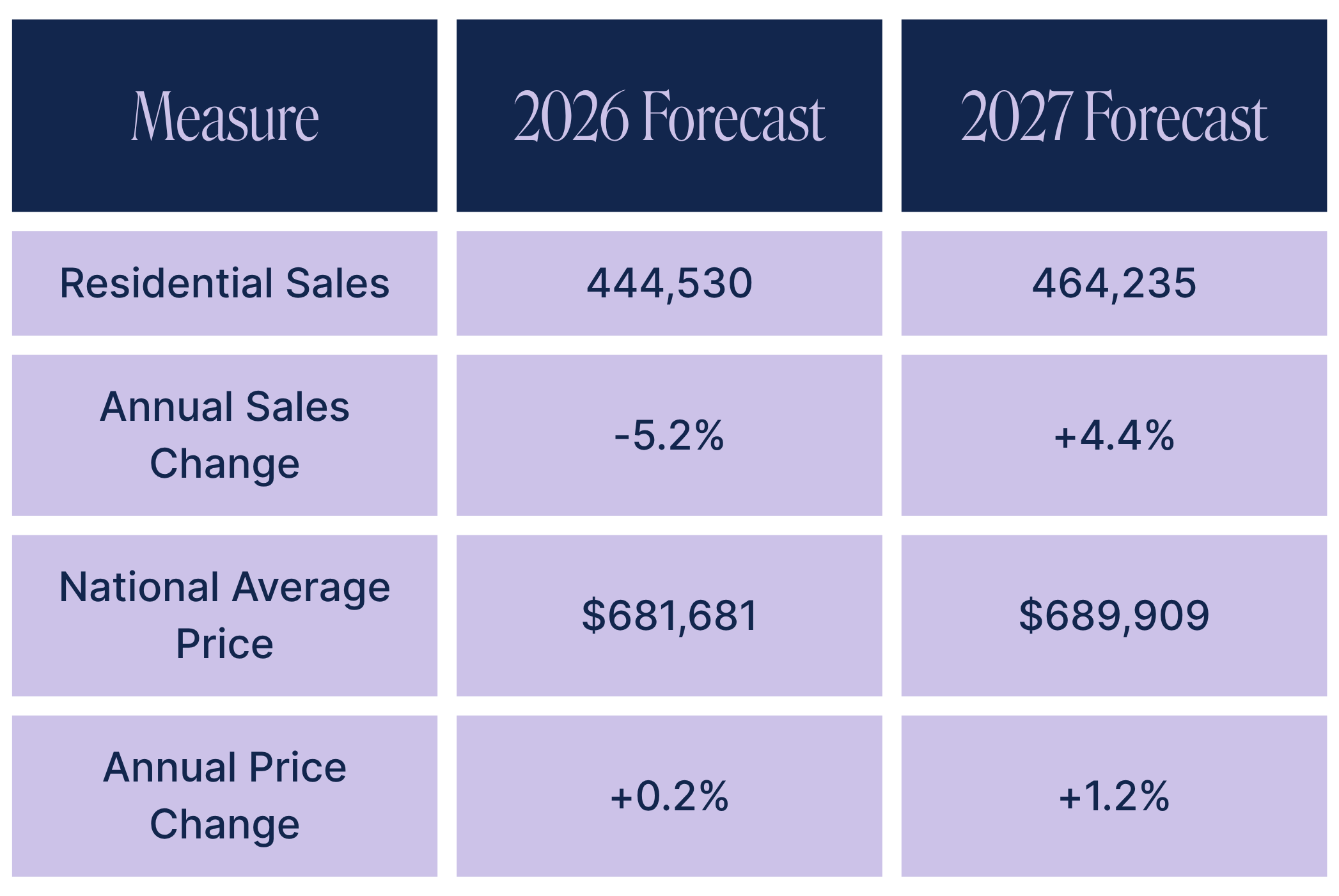
Source: Canadian Real Estate Association, October 16, 2026 quarterly forecast. These are national projections, not Winnipeg-specific forecasts.
Here's what stands out to me. CREA is expecting fewer transactions this year. But it isn't forecasting a dramatic decline in the national average home price.
In fact, its projections still suggest modest price growth. How can that be? Because sales activity and home prices are not the same thing.
Fewer people buying homes doesn't automatically mean sellers will accept substantially lower prices. Some sellers simply choose not to move. Others wait for conditions to improve. And in markets where desirable homes remain relatively scarce, buyers may still compete for the properties they want.
There's also an important regional distinction. CREA anticipates different outcomes across the country, including price declines in Ontario and British Columbia for 2026, while other provinces are expected to experience modest growth.
This is why I have always been cautious about treating Canadian real estate as one giant market.
Winnipeg is not Toronto.
It's not Vancouver.
And even within Winnipeg, the market for a $350,000 starter home can look very different from the market for an $850,000 family home.
What Are We Actually Seeing in Winnipeg?
Now let's bring this conversation closer to home.
The most recent completed monthly statistics we're using for this update are from September 2026, released by the Winnipeg Regional Real Estate Board. And they show a market that has been changing.
City of Winnipeg Detached Homes: September 2026
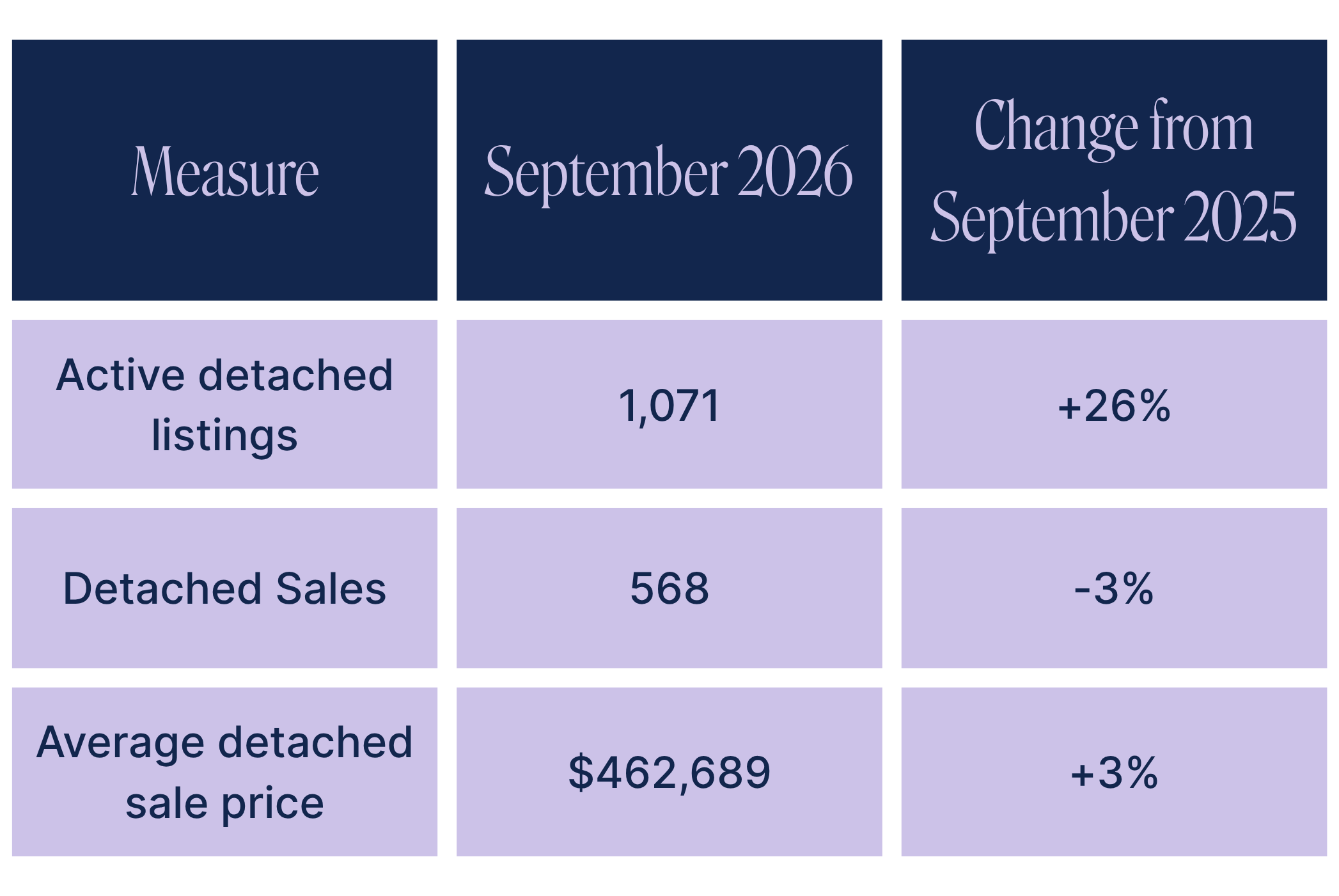
City figures above are carried forward from our September Winnipeg market update. The regional release linked below covers a broader geography and should not be used interchangeably with this table.
Across the wider Winnipeg Regional Real Estate Board market, total active MLS® listings reached 4,234 in September, an increase of 14% compared with the previous year.
Total sales declined 10% to 1,250. Regional detached active listings totalled 2,098, up 20%—a different measure from the city-only total above.
Source: Winnipeg Regional Real Estate Board September 2026 release.
At the same time, the year-to-date average detached home price across the board's market region reached $467,687, up 3% from the corresponding period in 2025.
Think about that combination.
More homes available.
Fewer transactions.
Yet average detached home prices remained higher than a year earlier.
That's exactly why I think we need to be careful when interpreting housing market headlines. A slowdown in activity doesn't automatically translate into falling prices. It also doesn't mean every home is increasing in value.
Average prices are influenced by which homes happen to sell in a given period, so individual property values still need to be evaluated using relevant comparable sales.
But the broader picture is clear: Winnipeg has been giving buyers more choice without experiencing a uniform decline in detached home prices.
Why More Listings Haven't Eliminated Bidding Wars
One of the things that has fascinated me this year is how differently properties have been performing. Earlier in 2026, we saw an extremely competitive spring market.
Multiple offers were common, particularly on homes that were well presented, appropriately priced, and located in neighbourhoods with strong buyer demand.
As we moved into the summer and fall, inventory increased. But that didn't mean every buyer suddenly had an abundance of suitable options.
This is our team’s observation from working with buyers, rather than a board-wide statistical measure. For example, we’ve continued to notice shortages in certain parts of the $600,000 to $900,000 market, particularly for larger family homes in south Winnipeg.
Buyers looking for approximately 2,000 square feet or more, in a desirable location, with a reasonable level of updating, haven't always found as much choice as the overall inventory numbers might suggest.
That's because more inventory doesn't necessarily mean more of the right inventory.
If a buyer needs four bedrooms, a functional family layout, a particular school catchment, and a home that doesn't require substantial renovations, their options may still be limited.
When a property checks those boxes, competition can remain strong.
On the other hand, homes that need considerable work, are priced beyond what recent sales support, or don't present particularly well may sit longer.
We're seeing buyers become more selective. And I think that selectivity will become even more important if borrowing costs continue to rise.
Why Presentation Matters Even More When Buyers Have Choices
I know I talk about staging and presentation a lot. But there's a reason.
When buyers have very few options, they may be more willing to overlook a dated kitchen, awkward layout, or a long list of cosmetic improvements.
When buyers have more homes to compare, those same concerns can become deciding factors.
And when their borrowing costs are increasing, renovation expenses may feel even more intimidating.
A buyer who is already stretching to afford a monthly mortgage payment may be less enthusiastic about purchasing a property that also needs $50,000 in improvements.
That doesn't mean every seller needs to renovate. Far from it.
Sometimes the right answer is a deep clean, fresh paint, thoughtful staging, professional photography, and a realistic asking price. Our home staging guide explains how to approach that preparation. Other times, it makes more sense to sell the property in its existing condition and price it accordingly. The important thing is understanding the expectations of the buyers most likely to purchase your home. The days of assuming that almost any property will attract aggressive bidding simply because it's listed may be behind us for now.
But a well-executed listing strategy can still make an enormous difference.
Buyers May Have More Negotiating Power But Less Borrowing Power
This is one of the most important contradictions in the current market. A buyer may finally have an opportunity to purchase without competing against six other offers.
They may be able to include a home inspection condition. They may have more time to review comparable sales. They may even negotiate a more favourable purchase price. Those are meaningful improvements.
But if mortgage rates are higher, that same buyer may qualify for less financing or face a higher monthly payment.
So while the buying process can become less competitive, the cost of borrowing may become more challenging. This is why I don't think buyers should focus exclusively on whether home prices are going up or down.
The better question is: What will this home cost me each month, and am I comfortable with that amount?
A slightly lower purchase price doesn't necessarily produce a lower monthly payment if financing costs have increased enough.
And conversely, waiting for prices to fall can backfire if the property you want remains competitive or borrowing costs rise further. There's no universal answer.
The right decision depends on your finances, your housing needs, and the specific properties available to you.
Housing Affordability Is About Supply, Too
CMHC’s October 20 research, House Prices Across Countries: Why Canada Stands Apart, highlights population growth and limited supply as important contributors to Canada’s affordability gap. Its summary notes that Canadian real house prices (prices adjusted for inflation) have more than doubled since 2005.
That distinction matters. An inflation-adjusted comparison is different from simply comparing the dollar amounts on two sale agreements.
For buyers and sellers, my practical takeaway is that mortgage rates tell only part of the story. The availability of suitable homes matters, too. More listings across a region may still leave a family with very few options in its preferred neighbourhood, layout and budget.
A national supply challenge does not establish the value of an individual Winnipeg property or guarantee future appreciation.
Source: CMHC housing research, which lists the October research.
What About the Canada-U.S. Trade Relationship?
There is another factor worth watching as we head toward 2027: Canada's economic relationship with the United States.
Trade negotiations, tariffs, and broader political uncertainty can influence Canadian businesses, employment, investment, consumer confidence, and inflation.
The Bank of Canada's October outlook specifically identifies Canada-U.S. trade relations as an important source of economic uncertainty.
For Manitoba, that matters. Our economy is connected to agriculture, manufacturing, transportation, and other industries that depend on trade. Changes in business confidence and employment expectations can eventually affect how comfortable households feel making major financial commitments.
That doesn't mean every new trade headline will immediately affect Winnipeg home prices. But it helps explain why the Bank of Canada is being cautious about predicting the path of interest rates. The global economy, domestic inflation, and housing affordability are all interconnected. And none of them can be predicted with complete certainty.
So What Does This Mean for Winnipeg Sellers?
If you're considering selling your home before the end of 2026 or in spring 2027, I wouldn't interpret these headlines as a reason to panic. But I also wouldn't assume the market will behave exactly as it did this past spring.
The strategy matters.
1. Price According to Today's Market
When we establish a listing price, we're looking at recent comparable sales, current competition, and the characteristics of your particular property.
A home that sold in a bidding war six months ago may still be an important comparable. But we also need to understand whether buyer behaviour has changed since that sale.
And if your home is priced above what the market supports, buyers now have more opportunities to move on to something else.
2. Take Preparation Seriously
Presentation has always been important to our team. In a more selective market, I think it becomes even more valuable.
Professional photography, video, staging, thoughtful marketing, and making sure a property shows its best can help attract the buyers who are already being more careful with their decisions.
That doesn't guarantee a particular sale price. But it gives the property the best opportunity to compete.
3. Don't Confuse a Slower Market With a Bad Market
A home that sells close to its properly established asking price can still achieve an excellent result. The goal shouldn't necessarily be to create the biggest possible gap between list price and sale price.
It should be to achieve the strongest result supported by the market.
4. Think Carefully About Timing
Some sellers may benefit from listing before the holidays. Others may be better served by using the winter to prepare for a spring launch. The answer depends on the property, the likely buyer, and the seller's next steps.
If you're also purchasing another home, the availability of your next property may be just as important as the timing of your sale.
What Does This Mean for Winnipeg Buyers?
For buyers, I think the next several months could present some interesting opportunities. But I would approach the market with preparation rather than trying to perfectly time it.
1. Revisit Your Mortgage Pre-Approval
If your pre-approval was completed several months ago, speak with your mortgage professional before making an offer.
Confirm your current borrowing capacity, available rates, and whether any existing rate hold is still valid.
2. Focus on Monthly Affordability
A purchase price is only one part of the equation.
Property taxes, utilities, insurance, maintenance, and financing costs all matter.
I'd rather see buyers purchase a home they can comfortably afford than stretch themselves simply because a lender is willing to approve a larger amount.
3. Take Advantage of Due-Diligence Opportunities
In some segments of Winnipeg's market, we're seeing more buyers successfully include inspection conditions and take the time to investigate a property before committing. That is a positive development.
It doesn't mean every property will allow for the same conditions, but it may provide opportunities that were harder to secure earlier in the year.
4. Don't Assume Every Seller Is Desperate
A property sitting on the market doesn't automatically mean the seller will accept a substantial discount.
Some sellers are motivated. Others have considerable flexibility. And well-priced properties can still generate competition.
The key is understanding the particular circumstances surrounding the home you're considering.
Should You Buy or Sell Now, or Wait Until Spring 2027?
This is probably the question I'll be hearing most often over the next few months. And the answer really does depend on your situation.
If you're buying your first home, the increased inventory and possibility of less competition may be appealing. If you're selling a home and purchasing another, we need to consider both sides of the transaction. If you're downsizing, your current home's market value and the availability of suitable smaller properties both matter. And if you're planning to upsize, the inventory available in your target neighbourhood and price range may influence the timing more than a national housing forecast.
For example, a family selling a $450,000 home and purchasing an $800,000 home has a very different set of considerations than someone selling a property and leaving the market entirely.
Sometimes a softer market can actually benefit a move-up buyer if the price difference between the two homes becomes more favourable. But higher financing costs may offset some of that advantage. That's why I don't believe there is one perfect market for everyone. There is only the market that makes sense for your particular move.
What I'm Watching as We Head Into 2027
There are several things I'll be paying close attention to over the coming months.
Interest rates: The Bank of Canada's next decision is scheduled for December 9, 2026. Whether it holds or raises rates again will help shape expectations for the new year.
Inventory: Will Winnipeg continue to see more listings than last year, or will sellers begin withdrawing from the market as winter approaches?
Buyer confidence: Will higher mortgage rates cause buyers to delay decisions, or will improved selection continue encouraging activity?
Price sensitivity: Will buyers become even more selective about condition, location, and asking price?
Spring demand: Will buyers who have postponed purchasing return in greater numbers when the spring market begins?
Economic uncertainty: How will energy prices, inflation, and Canada-U.S. trade developments influence household confidence?
None of these questions has a guaranteed answer today. And that's okay. Real estate decisions don't require perfect predictions. They require good information, realistic expectations, and a plan that can adapt.
A Plan for Your Next Winnipeg Move
If I could leave Winnipeg buyers and sellers with one thought this month, it would be this:
A changing market isn't necessarily a bad market. But the strategy that worked six months ago may not be the strategy that works today.
For buyers, more inventory and less competition in some segments may create opportunities that weren't available during the spring.
For sellers, strong results are still possible, but pricing, preparation, and presentation are becoming increasingly important.
And for homeowners watching interest rates, today's announcement is a reminder to review your mortgage and financial plans rather than make decisions based on headlines alone.
I don't believe in making dramatic predictions about where Winnipeg home prices will be six months from now.
There are simply too many variables. What I do believe is that good real estate advice should help people make confident decisions regardless of what the broader market is doing.
And sometimes that means moving forward. Sometimes it means waiting. And sometimes it means adjusting the plan you thought you had.
If you're considering buying or selling a home in Winnipeg, The Queen Team would be happy to look at your specific neighbourhood, price range, and circumstances.
Because while national headlines provide context, your real estate decisions deserve something much more personal.
Key Takeaways
The Bank of Canada raised its policy rate to 2.50% on October 28, 2026, its first increase since July 2023.
Variable-rate mortgages and HELOCs may become more expensive as lenders adjust their prime rates, while existing fixed-rate mortgages remain unchanged during their contracted terms.
CREA has lowered its national 2026 home sales forecast to 444,530 transactions, a 5.2% decline from 2025.
CREA still projects modest national average home price growth of 0.2% in 2026 and 1.2% in 2027.
Winnipeg's September detached inventory increased 26% year over year, while average detached prices remained 3% higher.
More listings don't necessarily eliminate competition for desirable properties in specific Winnipeg neighbourhoods and price ranges.
Higher borrowing costs may offset some of the financial advantages buyers gain through greater negotiating power.
CMHC’s research summary highlights the role of population growth and limited housing supply in affordability.
Buyers and sellers should base decisions on their individual circumstances, local comparable sales, and realistic financial planning rather than national predictions alone.
Frequently Asked Questions About Winnipeg Real Estate and Interest Rates
Did the Bank of Canada raise interest rates in October 2026?
Yes. On October 28, 2026, the Bank of Canada increased its policy interest rate by 0.25 percentage points, from 2.25% to 2.50%. It was the first increase since July 2023.
Will Winnipeg home prices fall because interest rates increased?
Not necessarily. Higher borrowing costs can reduce affordability and demand, but home prices also depend on inventory, employment, population trends, neighbourhood desirability, and property condition. Winnipeg's September 2026 detached average price remained above the previous year's level despite higher inventory.
Will my mortgage payment increase after the Bank of Canada's announcement?
It depends on your mortgage. Adjustable-rate mortgage payments may increase when lenders raise prime rates. Fixed-payment variable mortgages may initially maintain the same payment while allocating more toward interest. Existing fixed-rate mortgages generally remain unchanged until renewal or another contractual event.
Is it a good time to buy a house in Winnipeg?
It may be for buyers who are financially prepared and finding suitable properties. Increased inventory can provide more selection and opportunities for due diligence, although borrowing costs and competition vary. The right decision depends on your budget, preferred neighbourhood, and long-term plans.
Is Winnipeg still experiencing bidding wars?
Yes, in some segments. Desirable, well-presented homes that are priced appropriately can still attract multiple offers. However, competition has become less consistent across the broader market.
What is CREA predicting for Canadian home prices in 2027?
In its October 16, 2026 forecast, CREA projected a national average home price of $689,909 in 2027, an increase of 1.2% over its projected 2026 average. This is a national forecast, not a prediction for individual Winnipeg homes.
Should I wait until spring 2027 to sell my Winnipeg home?
Not automatically. The best timing depends on your property's condition, location, price range, likely buyer pool, preparation needs, and personal plans. Some homes can sell well during the fall and winter, while others may benefit from additional preparation before spring.
Why are Canadian home prices so high compared with other countries?
CMHC’s October 2026 research summary highlights population growth and limited supply. Its comparison concerns real, or inflation-adjusted, house prices. National findings do not determine the value of an individual Winnipeg home.
Thinking about buying or selling in Winnipeg? Please reach out! I’m happy to connect and discuss a strategy that fits your goals.

Your Friend in Real EstaTe,
Jennifer Queen
Phone: (204) 797-7945
Email: Jennifer@QueenTeam.ca
About the Author
Jennifer Queen is a Winnipeg REALTOR®, Broker and team leader of The Queen Team at Ethos Realty Inc. With more than 15 years of experience in Winnipeg real estate and a team completing approximately 200 transactions annually, Jennifer brings both market data and firsthand transaction experience to her analysis.
She works with buyers and sellers throughout Winnipeg and surrounding communities, helping clients navigate pricing strategies, multiple-offer situations, changing market conditions, and the financial considerations involved in buying and selling a home.
Jennifer believes that while national housing forecasts and economic headlines are useful, the most valuable real estate advice comes from understanding what is happening in the specific neighbourhoods and price ranges that matter to each client.