

By Sheyla Duncan, REALTOR® | The Queen Team | Ethos Realty Inc.
You might already be saving listings. Perhaps you've started noticing which neighbourhoods feel like somewhere you could live. Or maybe buying in 2027 is still just a conversation you keep coming back to.
You don't need to have everything figured out before asking for help.
One of the biggest misconceptions about buying a home is that you need your entire down payment saved and your mortgage approval in hand before speaking with a Realtor or mortgage professional. In reality, some of the most useful preparation happens months before your first showing.
Whether you're buying your first home, looking for more space, downsizing or relocating to Winnipeg, here's how I would approach getting ready.
How do you prepare to buy a home in Winnipeg in 2027?
Start with a comfortable monthly housing budget, then plan your down payment, closing costs and emergency savings. Speak with a mortgage professional and a Winnipeg REALTOR® early, explore neighbourhoods, and update your pre-approval before actively shopping. Learn how deposits, conditions and possession work before you need to make those decisions on a specific home.
Key Takeaways
You can start the conversation before you're ready for showings.
Your comfortable monthly budget matters as much as the amount a lender might approve.
Save for closing costs and a cash cushion as well as your down payment.
A deposit is part of the purchase funds, not an additional charge on top of the purchase price.
Compare neighbourhoods through your daily routine, commute and maintenance preferences.
Mortgage pre-approval does not guarantee approval of a particular property.
Prepare for the market you encounter when you're ready, rather than relying on predictions about 2027.
1. Start with your monthly budget
Before you spend too much time comparing listings, work out what owning a home could comfortably cost each month.
There is a difference between the amount a lender may approve and the amount you want to spend while still enjoying your life. Your housing budget should allow for:
Mortgage payments.
Property taxes.
Home insurance.
Heating, electricity, water and other applicable utilities.
Maintenance and repairs.
Condominium fees, where applicable.
Changes to commuting, parking or other regular expenses.
Then look beyond housing. Will you still have room for childcare, activities, retirement savings and unexpected expenses?
A larger house may fit the mortgage calculation while leaving you uncomfortable with the total monthly commitment. An older home with a lower purchase price may need more immediate maintenance. A condo may reduce some hands-on responsibilities while adding monthly fees and potential special assessments.
Try this now: write down a monthly housing amount that feels comfortable, along with a separate maximum purchase price once your lender has assessed your options. They answer different questions.
A mortgage professional can explain how income, debts, credit history and mortgage qualification requirements affect your borrowing capacity. You can begin that conversation even if your savings goal is still a work in progress.
2. Build a savings plan for more than the down payment
How much down payment do you need? For eligible purchases under the current Canadian framework:
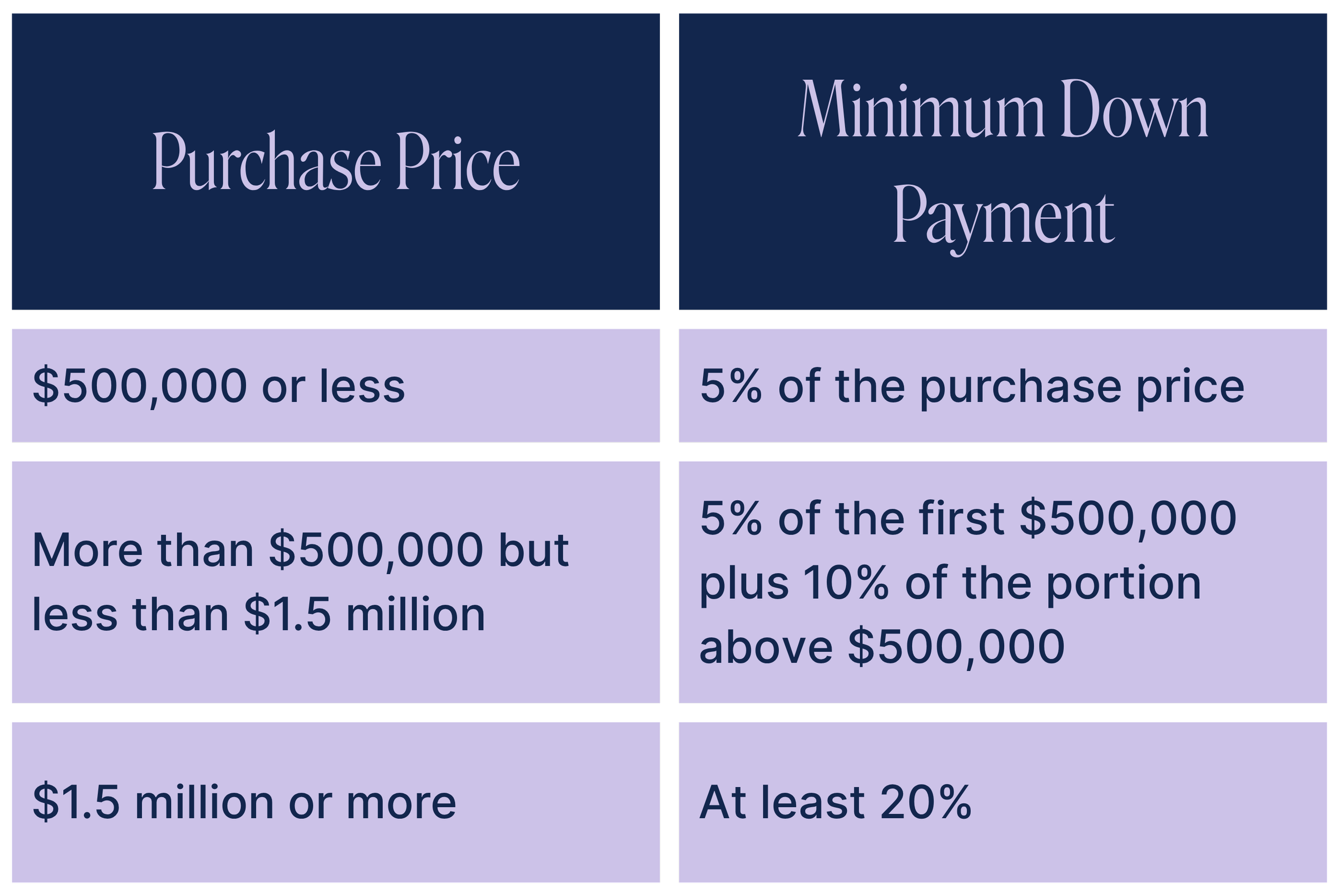
For example, the minimum on a $400,000 home could be $20,000. On a $600,000 home, it could be $35,000.
These minimums do not mean every borrower or property qualifies. Your lender may require more depending on your circumstances and the purchase. See the federal government's mortgage down payment parameters.
With less than 20% down, mortgage default insurance is typically required. It protects the lender if you default; it does not protect you in the way home insurance does. Manitoba also applies provincial sales tax to mortgage insurance premiums, and that tax cannot be added to the mortgage. Ask your lender to include it in your cash requirements. Source: Financial Consumer Agency of Canada.
What other costs should you plan for?
Your purchase budget may also need to cover:
Manitoba land transfer tax and registration charges.
Legal fees and disbursements.
Title insurance, if required or recommended.
A professional home inspection and any additional investigations.
Property tax and other closing adjustments.
Appraisal or lender-related charges, where applicable.
Applicable taxes on mortgage insurance premiums.
Moving expenses, utility setup and immediate purchases or repairs.
Any buyer-paid brokerage remuneration under your service agreement that is not otherwise covered.
For an ordinary resale purchase, we often suggest an initial allowance of approximately 2–2.5% of the purchase price for closing costs, in addition to the down payment. Treat that as a starting estimate. Obtain a purchase-specific estimate from your lawyer and mortgage professional; some transactions will need more.
A $400,000 Winnipeg purchase: a planning example
Assume an eligible buyer is purchasing a resale home with 5% down:
Down payment —>$20,000
Preliminary closing-cost allowance at 2–2.5% —> $8,000–$10,000
Initial savings target for those two categories —>$28,000–$30,000
Moving costs, immediate work and emergency reserve —> Additional; based on your situation
At a fair market value of $400,000, Manitoba land transfer tax under the current provincial schedule is $5,650, assuming no exemption applies. This is included within your closing-cost planning allowance, not added a second time. A separate registration fee also applies. Your lawyer should confirm the tax and final adjustments. Source: Manitoba Finance.
The point of this example is to make the savings goal clearer. Having $20,000 available does not automatically mean you have all the cash needed for a $400,000 purchase.
If you're a first-time buyer, ask about savings programs early
Two resources worth reviewing with your financial professional are:
First Home Savings Account (FHSA): participation room in the year you open your first account is $8,000, with a $40,000 lifetime limit. Contributions are generally deductible, and qualifying withdrawals are tax-free. Eligibility and withdrawal conditions apply. CRA FHSA guidance and participation limits.
Home Buyers' Plan (HBP): eligible participants can withdraw up to $60,000 from RRSPs under the program. Repayment requirements apply. CRA Home Buyers' Plan guidance.
Ask about eligibility, timing and repayment obligations before moving money. A savings program can help with planning, but it doesn't replace a full affordability assessment.
3. Connect with a Winnipeg REALTOR® before you feel completely ready
You don't need a finished plan to have an initial conversation.
If you hope to buy in spring or summer 2027, we can start by discussing your timeline, approximate budget, preferred areas and what you want your next home to make possible.
Perhaps your next step is speaking with a lender. Perhaps it's building a realistic savings target or exploring areas you've never considered.
That early conversation can make the months ahead much more purposeful without requiring you to start booking showings immediately.
Before we provide real estate services, we'll also review a written service agreement. In Manitoba, it sets out the services, timeframe, termination provisions and how the brokerage will be paid. Ask about exclusivity and any payment obligations before signing. Source: Manitoba Real Estate Association.
For the broader process, keep our complete guide to buying a home in Winnipeg handy as a reference.
4. Research neighbourhoods through your everyday routine
Choosing an area is easier when you picture an ordinary weekday.
Where will you go to work? Who handles school or daycare drop-off? How important is being close to family? Would a longer drive still feel manageable in winter?
Winnipeg offers very different housing and neighbourhood experiences:
If mature streets and established homes appeal to you, explore River Heights and established parts of St. Vital.
If you prefer newer housing, consider communities such as Sage Creek, Bridgwater and Prairie Pointe.
If you want to compare a broader mix of homes, include areas such as Transcona and St. James.
If you're considering a community outside Winnipeg, such as Oakbank or La Salle, compare the commute and the specific property's services alongside the home itself.
These are starting points, not rankings. A neighbourhood can contain different housing types, price points and street-by-street experiences.
Compare the trade-offs that matter to you
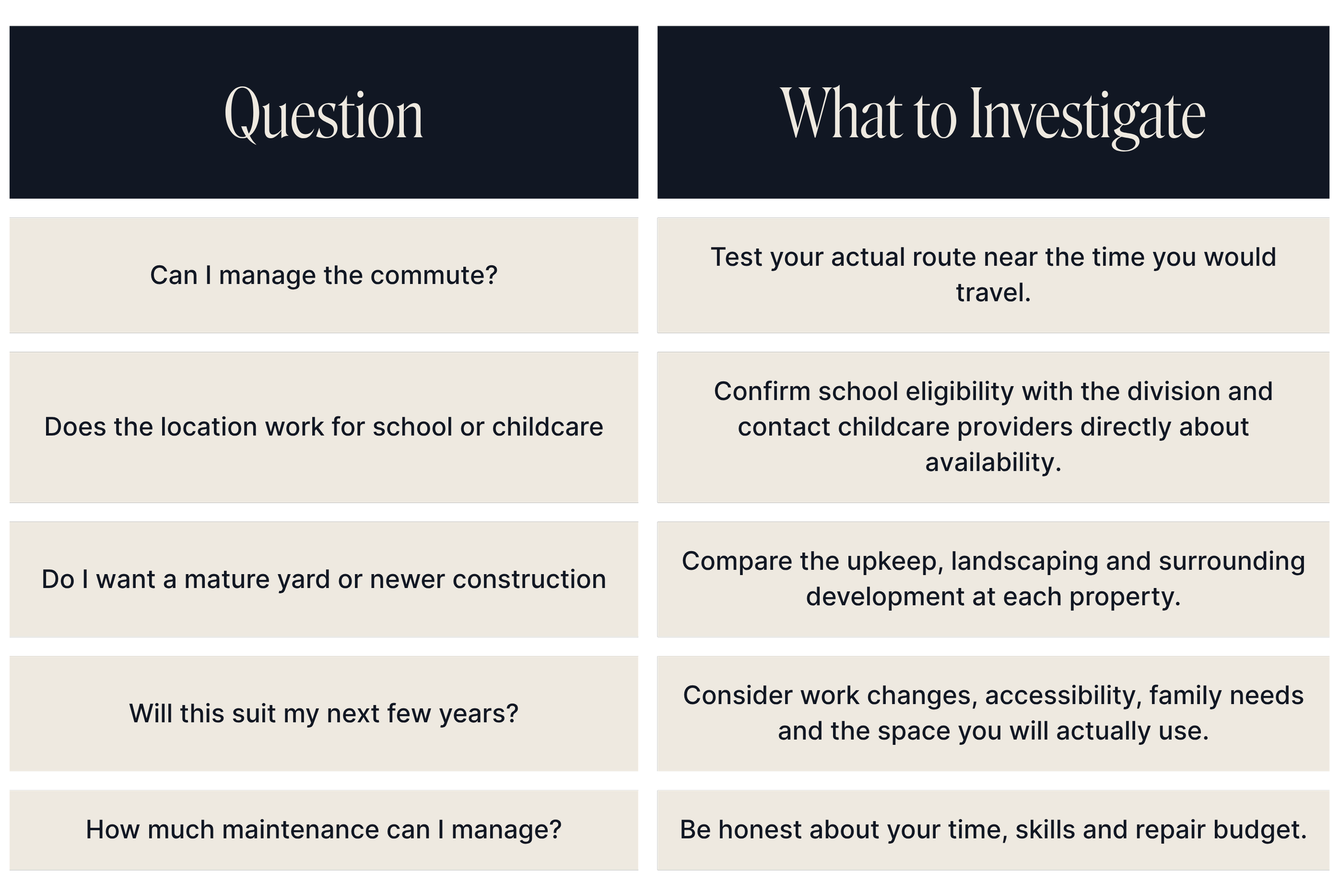
If you're arriving from another city, start with our Winnipeg relocation guide. Give yourself time to compare how neighbourhoods work for your routine before committing to one based on listing photos.
5. Learn how to judge value before an offer deadline
One thing I explain to buyers is that a home's asking price doesn't necessarily tell you its market value or what it will sell for.
A property listed at $399,900 could sell above that amount. Another home with the same asking price might sell below it.
We look at comparable sales, condition, location, layout and current competition to put the price in context. A citywide headline can't tell you whether a specific home is appropriately priced.
If you're preparing now, use the time to learn what your likely budget buys in several areas. Pay attention to the differences between homes rather than treating every three-bedroom property as equivalent.
Should you wait for a better market in 2027?
Nobody can promise what Winnipeg prices, inventory or mortgage rates will do in 2027.
A more useful approach is to identify the conditions under which buying would work for you: a comfortable payment, enough cash remaining after closing, a suitable home and terms you understand.
Those criteria give you something practical to evaluate when you're ready.
6. Update your mortgage pre-approval before active shopping
An early lender conversation helps you plan. A current pre-approval helps you search within a realistic range.
Before you begin actively touring, ask your mortgage professional:
What price range should I use for my search?
What payment would different purchase prices produce?
What documents or conditions remain outstanding?
Is there a rate hold, and when does it expire?
How much cash do I need, and when must it be available?
What changes to my employment, debt or savings should I discuss before making them?
Pre-approval is not final mortgage approval. The lender still needs to assess the property and confirm its requirements are met. If you are self-employed, changing jobs, relying on gifted funds or buying while selling another home, raise that early. Those details can affect the preparation your lender needs.
7. Tour homes with both lifestyle and maintenance in mind
Once you're ready to search, your priorities may change.
You might discover you prefer the layout and yard of an established home to newer finishes. A double garage might matter more than a finished basement. Or the right location might make a smaller floor plan feel like a better fit.
Keep a short list of genuine must-haves and a separate list of preferences. That gives us room to explore without losing sight of what matters.
Look beyond the cosmetic features
During showings, pay attention to basement moisture, foundation concerns, drainage, the apparent condition of major systems, and questions about previous renovations.
A showing helps identify questions. It does not replace an inspection or specialist assessment.
In Winnipeg, it is also worth considering how the property functions through winter and spring. Where will snow go? How accessible is the garage? What can we see of grading and drainage? If snow covers the roof, yard or exterior surfaces, what remains unverified?
Ask an inspector about those limits and whether further evaluation is appropriate. Read our Winnipeg home inspection guide for a fuller explanation of inspections and pre-inspections.
A pre-inspection may be an option before an offer where access and timing allow. You pay for it before knowing whether you will buy the property, and it has limitations too. Discuss the options before a competitive deadline leaves you feeling rushed.
8. Understand the offer decisions before making them
An offer involves price, deposit, conditions, possession and included items. Talk through these before finding a home you love.
Deposit versus down payment
A deposit is an advance payment credited toward the purchase price. In a typical financed purchase, it forms part of your down payment.
For example, if your total down payment is $20,000 and you've already paid a $10,000 deposit, the remaining down payment is $10,000, plus closing costs. You do not add the deposit to the full $20,000 again.
The deadline is the one written into your offer. Have accessible funds and confirm payment arrangements before submitting. The standard contract's 24-hour written-notice provision addresses a deposit default; it is not a universal deadline after acceptance. Source: Manitoba residential offer form, section 5.
Conditions and included items
Discuss financing, inspection and any other conditions you need, with clear deadlines. Specify included appliances and other items in writing. Don't assume a pre-approval removes financing risk or a verbal understanding becomes part of the contract.
Possession timing
The current standard residential form provides for possession at 6 p.m. or when the parties' lawyers confirm completion, whichever is earlier, subject to the agreement. Confirm your arrangements before booking movers. Source: Manitoba residential offer form, section 3.
Multiple offers
If other buyers are interested, we'll discuss your options, the risks and the terms you're comfortable accepting.
I always remind buyers that winning a multiple-offer situation isn't the goal at any cost. The goal is to purchase the right property on terms you understand and can manage.
9. Know what happens between acceptance and moving day
An accepted conditional offer still requires work. Arrange the financing review, inspection and other agreed investigations promptly, and get guidance on the required notices before deadlines expire.
Once the purchase is firm, the focus turns to closing and possession. Your checklist will usually include:
Completing your lender's remaining requirements.
Meeting with your lawyer and providing funds when requested.
Arranging property insurance for the required effective date.
Setting up Manitoba Hydro, water and other applicable services.
Booking movers around confirmed access arrangements.
Planning for immediate maintenance, locks and essential purchases.
Keep communicating with your lawyer, mortgage professional and REALTOR® through closing. A firm purchase still needs those final steps completed.
If you're buying a condominium
Add document review to your planning, along with fees, reserve-fund information and potential special assessments. Manitoba condominium purchases generally carry a statutory seven-day cooling-off period tied to the later of the agreement and required disclosure delivery. Ask your lawyer to confirm the deadline and rights applying to your transaction. Source: Manitoba condominium buyer information.
If you also need to sell
Discuss both transactions before committing to a purchase. Ask about access to sale proceeds, carrying two homes, possible bridge financing and whether a sale-of-home condition is appropriate. Your lender should assess the financing, while your Realtor helps you plan the timing and offer strategy.
A practical timeline for buying in 2027
These are flexible planning stages, not deadlines everyone must follow.
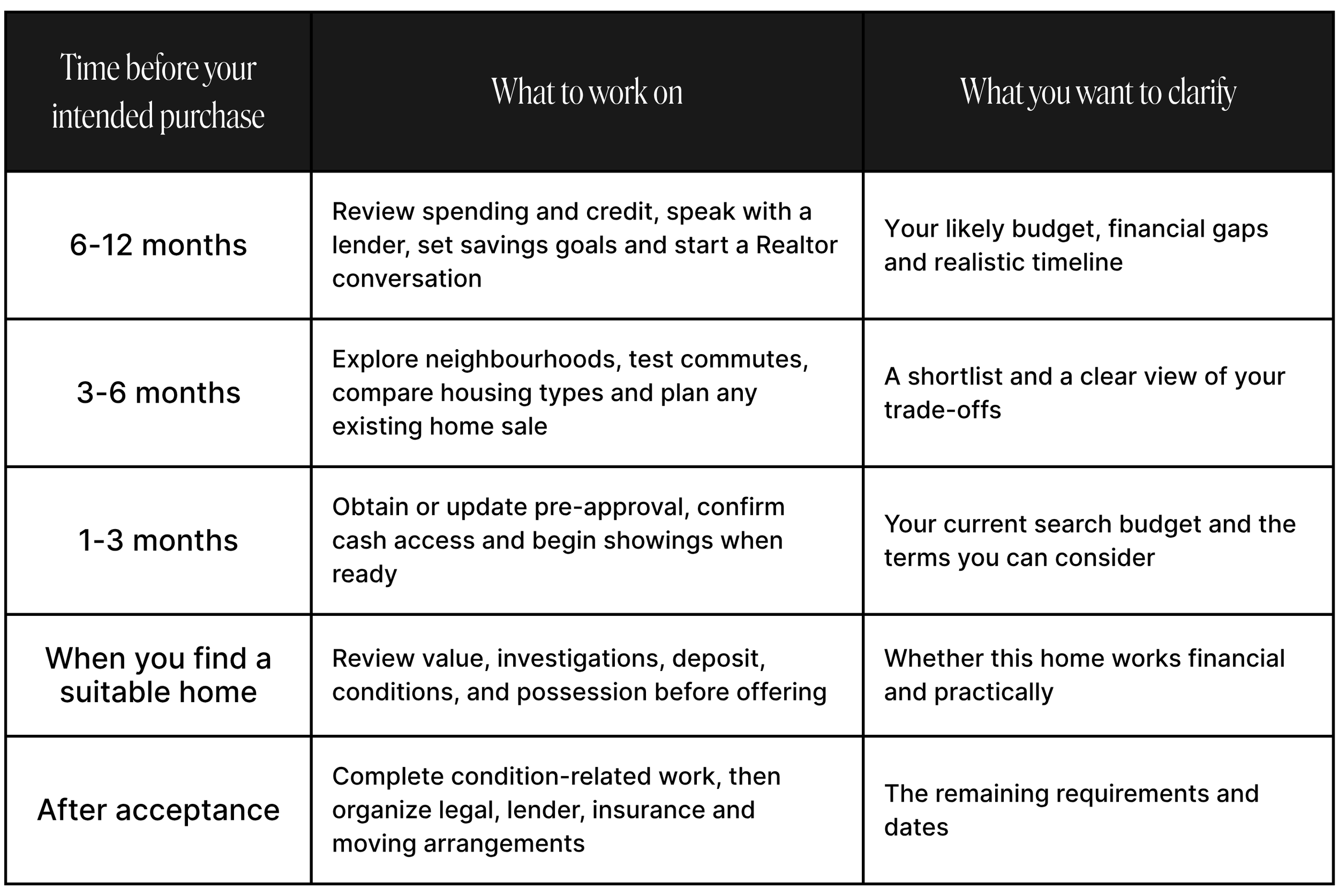
If your plans are less than three months away, you haven't necessarily missed your opportunity. Start with an assessment of where you are now. Some buyers need a longer preparation period; others already have much of the groundwork in place.
Your next step can be a conversation
You don't need to know the neighbourhood, the exact budget and the possession date before reaching out.
If buying in Winnipeg in 2027 is on your mind, tell me what you're considering and what still feels uncertain. We can work out whether your next step is a lender conversation, a savings plan, neighbourhood research or preparing to search.
Connect with me, Sheyla Duncan, to start planning your Winnipeg purchase.
Download the Quick Guide to Buying a Home in Winnipeg
If you’d like something you can refer back to as you go, we’ve created a simple guide that walks you through everything step by step.
While I call it a quick guide, it is actually far more comprehensive than the short steps downloaded above. Yet, I feel I’ve managed to break it down into navigable pieces that make the process feel less daunting. Receive a copy by filling out the form below.
Frequently Asked Questions
How early should I contact a REALTOR® if I want to buy in 2027?
Several months ahead can be helpful, and you can reach out earlier if you need a longer preparation period. An initial conversation can clarify the process and your next steps without starting showings immediately.
How much should I save to buy a $400,000 home in Winnipeg?
An eligible buyer using 5% down would need $20,000 for the down payment. Adding an initial 2–2.5% closing-cost allowance brings those two categories to $28,000–$30,000. Moving costs, immediate work and an emergency reserve are additional. Confirm your own figures with your lender and lawyer.
Is the deposit extra money on top of my down payment?
No. It is credited toward the purchase price and generally forms part of your down payment in a financed purchase. You do need to have it available by the deadline in your offer.
Should I get pre-approved now if I won't buy until later in 2027?
Start with a mortgage planning conversation now. Obtain or update your formal pre-approval closer to active shopping, and ask when any pre-approval or rate hold expires.
Can I buy with less than 20% down?
Many eligible buyers can. The required amount depends on the price, property, mortgage product and borrower. Mortgage default insurance is typically required below 20%. Have your mortgage professional confirm what applies to you.
Should I wait for Winnipeg home prices to fall in 2027?
There is no dependable promise that prices will fall, rise or move uniformly across the city. Focus on your financial readiness, the available properties and the terms of the purchase when you are ready.
Can I buy a home in Winnipeg during winter?
Yes. Plan for weather and daylight, and ask how snow or ice affects what can be evaluated at the property. An inspector can explain limitations and any recommended follow-up.
Do I need a home inspection?
I recommend discussing a professional inspection before you offer. It can help you understand visible condition and potential further investigations. An inspection has limits and does not guarantee that every defect will be found.
What if I'm relocating and can't attend every showing?
Discuss your travel schedule, remote viewing options and inspection arrangements early. Narrow your neighbourhood priorities before a house-hunting trip, and give yourself time to understand the location as well as the property.

Your Friend in Real Estate,
Sheyla Duncan
Tel: (204) 871-3228
Email: Sheyla@QueenTeam.ca
About the Author
Sheyla Duncan is a Winnipeg REALTOR® with The Queen Team at Ethos Realty Inc. Her work focuses on helping buyers and sellers understand their options, alongside practical homeownership education, relocation guidance and South Winnipeg neighbourhood information. Sheyla takes a patient, approachable approach to explaining the decisions involved in a move, from early preparation through possession.
