
Downsizing Your Home: How to Make the Transition Smoother (and Why It's Often Harder Than People Expect)

Downsizing your home is about much more than moving into a smaller space. It often represents a major life transition: one that can bring excitement, relief, uncertainty, and even grief all at once. Whether you're looking to reduce maintenance, simplify your lifestyle, or prepare for retirement, having a thoughtful plan can make the process far less overwhelming and help you embrace the opportunities that come with your next chapter.
For many homeowners, there comes a point when "less" begins to sound a lot like "more."
Maybe the kids have moved out and half the bedrooms rarely get used. Perhaps maintaining the yard has become more work than enjoyment. Or maybe you're simply ready to spend less time maintaining a home and more time travelling, visiting grandchildren, or enjoying retirement.
Whatever the reason, downsizing can be an incredibly positive decision.
But I'll also tell you something I've learned after helping many Winnipeg families through this transition: Downsizing is rarely just about square footage. More often than not, it's emotional. Because you're not simply leaving a house. You're leaving the place where birthdays were celebrated, children were raised, holiday dinners were shared, and countless everyday moments became lifelong memories.
That deserves to be acknowledged.
The good news? With thoughtful planning, downsizing doesn't have to feel overwhelming. In fact, many of our clients tell us afterward that they wish they had done it sooner.
Why More Winnipeg Homeowners Are Choosing to Downsize
Downsizing isn't just something people do after retirement anymore. We're seeing homeowners choose smaller homes for many different reasons, including:
Reducing home maintenance
Lowering monthly expenses
Unlocking home equity
Moving closer to family
Improving accessibility
Eliminating stairs
Travelling more frequently
Simplifying life
For many people, downsizing isn't about giving something up. It's about creating room for the lifestyle they want next.
1. Start With Your "Why"
Before you start sorting through closets or browsing condominium listings, take some time to think about what you're hoping to gain. Ask yourself:
What do I want my daily life to look like?
What parts of homeownership do I still enjoy?
What responsibilities am I ready to leave behind?
Where do I want to spend my time instead?
Maybe your ideal future includes:
walking to restaurants and coffee shops
spending winters somewhere warm
having grandchildren over without worrying about yard work
living on one level
joining a condo community with amenities
Your "why" becomes the foundation for every decision that follows.
2. Recognize that Downsizing Is INCREDIBLY Emotional
One of the biggest surprises for many homeowners is just how emotional the process can become. Every drawer tells a story. Every closet contains memories. Every room represents a chapter of life.
It's completely normal to feel excitement one day and sadness the next. Those feelings don't mean you're making the wrong decision. They simply mean your home has been an important part of your life. Give yourself permission to acknowledge that.
Moving forward and appreciating the past can happen at the same time.
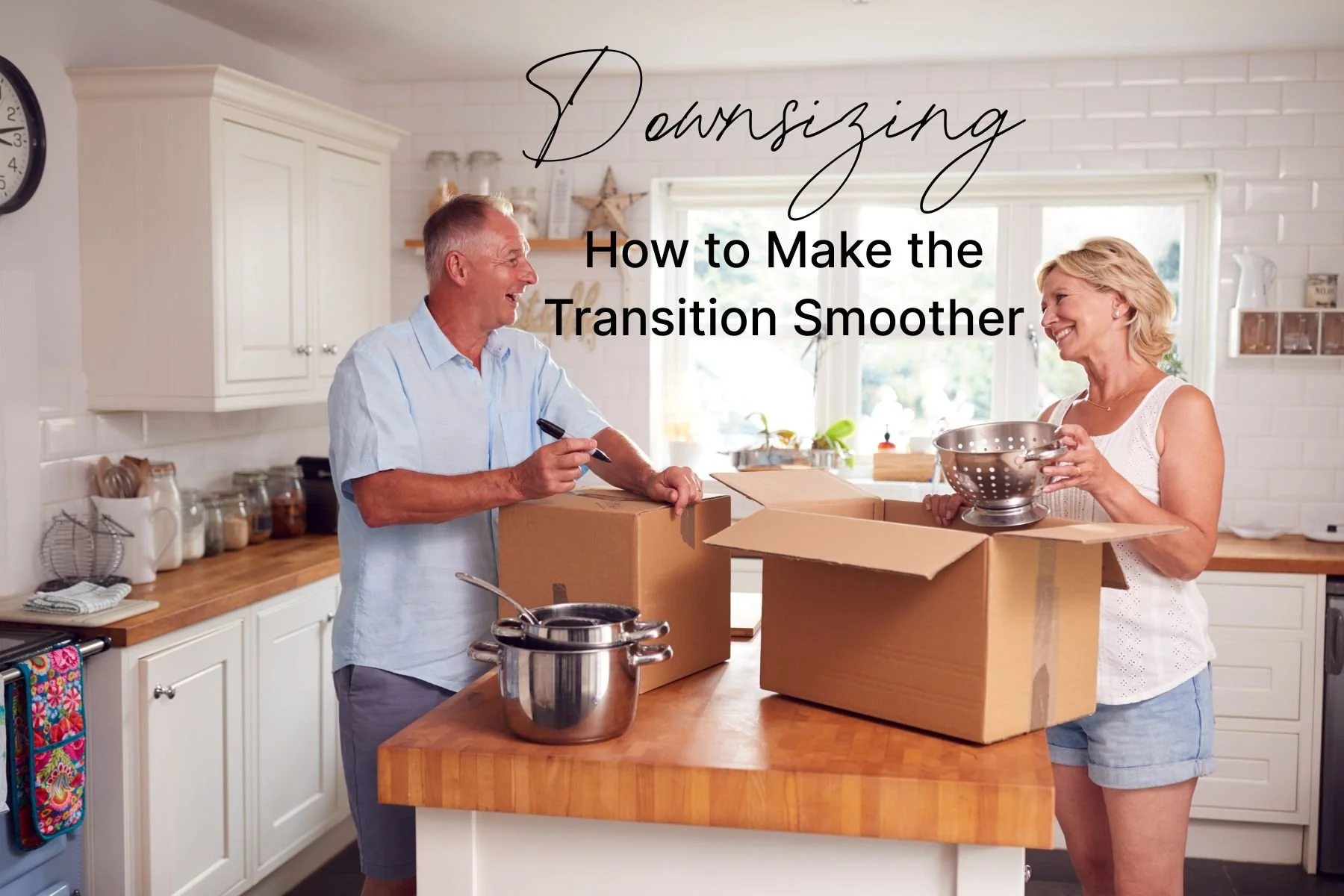
3. Declutter with Purpose
Something we see clients struggle with most is the letting go of the items they have accumulated in their home. We have always found that the best way to start is with one area at a time. Oftentimes that means one room at a time, or one closet at a time. You don’t have to do everything all at once!
One of the biggest challenges of downsizing is deciding what to keep. Ask yourself:
Have I used this recently?
Would I buy it again today?
Will it realistically fit into my next home?
Does it genuinely add value to my life?
Sentimental items are often the hardest. Rather than keeping everything, consider:
creating memory boxes
digitizing photographs
passing heirlooms to family members
displaying a few meaningful pieces instead of storing dozens
Remember: You're preserving the memories - not necessarily every object attached to them.
4. Think Beyond Square Footage
One of the biggest mistakes people make is focusing only on the size of the next home. Instead, think about how you want it to function. For example:
Do you want:
everything on one level?
an attached garage?
an elevator?
guest space?
a home office?
room for grandchildren to visit?
walking trails nearby?
restaurants within walking distance?
The goal isn't simply a smaller home. It's a home that better fits your next stage of life.
5. Plan Your New Space BEFORE You Move
One of the best ways to reduce stress is to understand what will (and won't) fit before moving day. Measure:
furniture
artwork
dining tables
bedroom suites
You may discover that:
your favourite chair fits perfectly
the oversized sectional doesn't
the dining table can be expanded only when family visits
one beautiful piece replaces three average ones
Many downsizers tell us they actually enjoy the lighter, more open feeling that comes from editing rather than filling every room.
6. Don’t Forget About the Financial Picture
Downsizing is often viewed as a lifestyle decision. But it's also a financial one. For many homeowners, selling a larger home may provide opportunities to:
reduce monthly expenses
eliminate or reduce a mortgage
build retirement savings
help children or grandchildren
travel more
simplify long-term budgeting
Before making any decisions, it's worth understanding:
your home's current market value
estimated selling costs
moving expenses
future housing costs
condominium fees (if applicable)
property taxes
Having a clear financial picture often makes the decision much easier.
7. Build the Right Team Early
One of the biggest misconceptions is that you call a Realtor when you're ready to list. In reality, many downsizers contact us months before they plan to move. Those early conversations often involve:
discussing neighbourhood options
understanding home values
developing a timeline
creating a decluttering plan
coordinating trades
recommending movers
connecting clients with estate sale companies or organizers
Sometimes the best thing we provide isn't a market evaluation. It's a roadmap.
Focus on What You’re Gaining
It's easy to think about what you're leaving behind. But I encourage clients to also think about what they're moving toward. Perhaps you're gaining:
weekends without yard work
lower maintenance
more financial flexibility
easier travel
less cleaning
more freedom
a stronger sense of community
Downsizing isn't the end of a chapter. It's the beginning of a new one.
Key Takeaways
Downsizing is both a financial and emotional decision.
Starting with a clear vision makes every other decision easier.
Decluttering is most successful when tackled gradually.
Your next home should fit your lifestyle (not just your furniture).
Planning ahead reduces stress and creates more options.
The right professional team can make the transition significantly smoother.
Frequently Asked Questions about Downsizing in Winnipeg
When is the right time to downsize?
There's no universal answer, but many homeowners find it's easier to move while they can still make decisions on their own timeline rather than waiting until a move becomes necessary. If you are starting to feel overwhelmed by the amount of work at your existing property, it is certainly an idea worth exploring.
Should I buy my next home before selling my current one?
It depends on your finances, comfort level, and the current market. Some people prefer the certainty of selling first, while others choose to purchase before listing. This is often where we typically become involved, and advise based on the current market conditions as well as your situation.
Is a condominium always the best option for downsizers?
Not necessarily. Some homeowners choose condominiums for the maintenance-free lifestyle, while others prefer smaller detached homes, bungalows, or townhomes. It really depends on what makes you most comfortable. The best choice depends on your lifestyle and long-term goals.
How long does the downsizing process usually take?
For homeowners who have lived in the same home for many years, it's not uncommon for the process to take several months and sometimes even years. This includes the early declutter stages in which the idea is oftentimes ruminating. Starting early allows you to make thoughtful decisions without feeling rushed.

Your Friend in Real Estate,
Jennifer Queen
(204) 797-7945
Jennifer@QueenTeam.ca
About the Author
Jennifer Queen is a Winnipeg Realtor, Associate Broker and team lead of The Queen Team. She has helped hundreds of families navigate major life transitions, including downsizing, retirement moves, estate sales, and rightsizing into homes that better fit their changing lifestyles.
Jennifer believes that downsizing is about far more than moving into a smaller home. It's about creating a thoughtful plan that protects your equity, reduces stress, and helps you confidently embrace the next chapter of life.